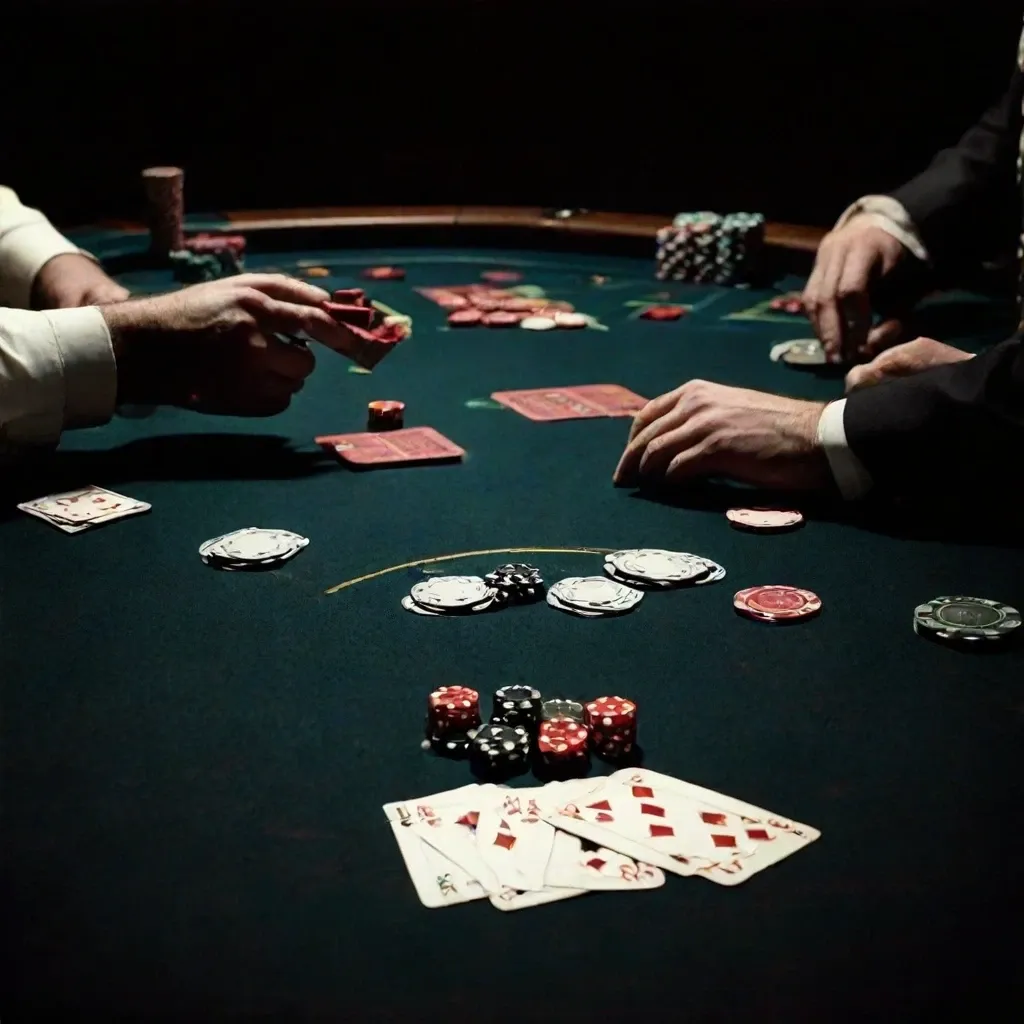
I once saw a guy, all confidence and swagger, walk into a casino, ready to take on the house. Hours later, he stumbled out, pockets empty, muttering about bad luck. But what if it wasn’t just bad luck? What if the game was rigged from the start?
Rigged casino games, both online and in brick-and-mortar establishments, are a harsh reality. They prey on unsuspecting players, turning dreams of hitting the jackpot into financial nightmares. The emotional toll can be devastating, leaving victims feeling cheated, angry, and vulnerable.
Casinos are businesses, and profit is their motive. However, there’s a line between smart business practices and outright deception. This article arms you with the knowledge to spot rigged casino games, both online and offline, protecting yourself from gambling scams and ensuring a fairer, more enjoyable gaming experience. Knowing how to identify casino cheating and online gambling fraud can keep your money where it belongs – in your wallet.
Understanding the Basics of Casino Game Fairness
Casino game fairness rests on a few core principles, ensuring what seems like chance truly is. At its heart is randomness, meaning every outcome in a game is unpredictable and independent of previous results. Think of flipping a coin: each flip has a 50/50 chance of landing on heads or tails, no matter what came before.
Casinos, like any business, operate with a profit margin, known as the house edge. This is a statistical advantage built into the game to ensure the casino makes money over the long term. It’s important to remember that the house edge doesn’t guarantee the casino will win every time; it simply means that, across thousands of bets, the casino is mathematically likely to come out ahead. For example, a game with a 5% house edge theoretically returns $95 for every $100 wagered over a long period.
Closely related to the house edge is the Return to Player (RTP) percentage. This represents the percentage of wagered money a game is expected to pay back to players over time. A game with a 95% RTP, therefore, has a 5% house edge. Knowing a game’s RTP is crucial for players seeking better odds. This information is often available in the game’s information section or on the casino’s website. Games like blackjack and some video poker variations often have higher RTPs than slots, but it’s game-specific.
To maintain fairness, regulatory bodies such as the Malta Gaming Authority or the UK Gambling Commission issue gambling licenses and conduct audits. These organizations ensure casinos adhere to strict standards of operation, including verifying the fair play and accuracy of their games. These checks and balances give players assurance that the games aren’t rigged and that outcomes are genuinely random.
Random Number Generators (RNGs): The Heart of Fair Games
A random number generator (RNG) serves like a games digital dice roller. An RNG is a computer algorithm that produces a sequence of numbers with no discernible pattern. These numbers determine the outcomes of games like slots, roulette, and even card draws in video poker. While computers use algorithms, called pseudorandom number generator (PRNG) to create these sequences, advanced RNGs undergo rigorous testing to ensure near-perfect randomness, avoiding predictable patterns. The integrity of the RNG is key to algorithmic fairness, although not all RNGs are created equal, as some can be more predictable than others.
Identifying Rigged Games in Physical Casinos
While casinos are built on the premise of chance, understanding potential manipulation techniques can empower players. Identifying rigged games in brick-and-mortar casinos requires a keen eye and an understanding of the subtle methods employed. This isn’t about paranoia; it’s about observation and awareness.
Card Games: Spotting Marked Cards, Cold Decks, and Dealer Collusion
In card games, the most common forms of cheating involve marked cards, cold decks, and dealer collusion. Marked cards aren’t always obvious; sometimes, the markings are subtle imperfections detectable only by trained eyes or under specific lighting conditions. A slight difference in the card’s sheen, a tiny crimp, or a barely perceptible alteration to the pattern on the back can be telltale signs. A “cold deck,” a pre-arranged stack of cards, might be introduced into the game through sleight of hand, often during a shuffle or under the table. The dealer switches de deck with a deck in they pocket. Furthermore, dealer collusion can be more difficult to detect, but look for patterns of signals with other players, unusually favorable dealing sequences for specific individuals, or unnatural control over the game’s flow. Infamous card-cheating operations have relied on a combination of these techniques, highlighting the importance of vigilance.
Roulette: Biased Wheels and Magnetic Balls
Roulette, though seemingly simple, is also vulnerable to manipulation. The most common method involves a biased roulette wheel, where certain numbers are statistically more likely to occur due to subtle imbalances. These imbalances can be the result of wear and tear, deliberate tampering, or manufacturing defects. Observing the results of numerous spins over time can reveal patterns suggesting a bias. Instead of betting randomly, focus on the areas where the ball lands more frequently. Much rarer, but worth noting, are instances of magnetic balls controlled by a croupier, allowing for near-certain control over the outcome. However, most modern casinos employ measures to prevent this.
Dice Games (Craps): Loaded Dice and Switching Techniques
In craps, manipulation often involves loaded or shaped dice. Loaded dice are weighted on one side, making certain numbers more likely to be rolled. Shaped dice have subtle alterations to their edges, which affects their tumbling behavior. These alterations are virtually imperceptible to the untrained eye. Dealers may be able to subtly switch out fair dice for loaded dice, increasing the house’s edge. The switching might occur during a lull in the game.

Spotting Rigged Games in Online Casinos
Proving that an online casino game is rigged presents significant challenges compared to traditional brick-and-mortar casinos. Players lack direct visibility into the software’s inner workings, making it difficult to detect manipulation. The core issue often lies in the casino’s software, which can be subtly altered to favor the house without players noticing. This manipulation can range from slight adjustments to the payout percentages to more overt methods that completely compromise the fairness of the game. One of the ways this is done is through the use of fake Random Number Generators (RNGs) which are integral to fair play but when manipulated, these fake RNGs lead to predictably unfair outcomes, diminishing a player’s chances of winning.
Unlicensed and Unregulated Casinos: A Recipe for Disaster
Licensing is critically important in the online casino world as it provides a baseline level of protection for players. A gambling license means the casino is externally audited and held to a standard. Unlicensed and unregulated casinos, often operating offshore, lack such oversight, making them prime candidates for fraudulent activity. Checking blacklists of known rogue casinos before depositing any money is essential for players to avoid falling victim to these schemes.
Software Manipulation: Tampered RNGs and Predetermined Outcomes
The heart of any fair online casino game is its Random Number Generator (RNG). A rigged RNG can drastically decrease a player’s odds by producing biased results. Beyond RNG manipulation, software can be tampered with in ways that are harder to detect, such as subtly increasing the house edge. These alterations can impact gameplay mechanics without being immediately obvious to the player.
Delayed or Withheld Payouts: A Major Red Flag
Rogue casinos frequently employ delay tactics when it comes to payouts. Common excuses range from “technical problems” to protracted “verification processes.” While legitimate technical issues can occur, repeated delays or an unwillingness to provide clear explanations should be seen as serious red flags. It is important to discern whether these are genuine issues or signs of a casino’s potential insolvency or fraudulent intent.
Unfair Bonuses and Predatory Terms
Be alert to casino bonuses that seem too good to be true. These often come with unfair or predatory terms, such as extremely high wagering requirements that are nearly impossible to meet. Other restrictive terms may include maximum withdrawal limits on winnings from bonus money or clauses that allow the casino to confiscate winnings for minor infractions of the bonus rules, making it virtually impossible to actually withdraw any winnings.
Legal and Ethical Considerations
Operating rigged games carries significant legal ramifications, potentially leading to hefty fines, license revocation, and even criminal charges for the individuals and establishments involved. Players encountering cheating scenarios possess certain rights that are protected by gambling law. These rights vary by jurisdiction but often include the right to a fair game, the right to dispute unfair practices, and the right to seek legal recourse if fraud is suspected. Casinos, on the other hand, have ethical obligations to ensure fair play, transparency, and responsible gambling practices. Upholding these principles is crucial for maintaining trust between casinos and their patrons and preserving the integrity of the gambling industry.
Understanding Your Rights as a Player
Gambling regulations are in place to protect you. Ignorance of the law is not an excuse; therefore, understanding your rights as a player is paramount. For example, imagine a gambler who suspects the roulette wheel is rigged. He has the right to request an investigation from the regulatory body overseeing the casino. Depending on the jurisdiction, the gambler might also be entitled to compensation if the investigation confirms foul play. These rights empower players to take action when they believe they have been wronged and promote fair practices within the gambling industry. Every jurisdiction has different regulations, so read up and get to know your rights as a player.
Reporting Suspicious Activity and Filing Complaints
Identifying and reporting suspicious activity is one recourse that players have at their disposal. If you suspect casino fraud, filing complaints with the appropriate regulatory bodies is essential. Regulatory bodies vary depending on location. For instance, in certain regions, the Gaming Control Board handles such complaints, whilst in other jurisdictions, it might be the responsibility of a specific gambling commission.

Protecting Yourself from Rigged Games
The world of gambling, whether online or in a brick-and-mortar casino, offers exhilarating highs but also carries inherent risks. While the allure of winning big can be strong, it’s crucial to remember that not all games are created equal, and the potential for encountering rigged systems exists. Player awareness and proactive measures are the strongest defenses against unfair play. Think of it as your personal shield in the gambling arena.
Due Diligence: Researching Casinos and Games
Before placing a single bet, conduct thorough research on the casino itself. Check for valid and legitimate operating licenses from reputable regulatory bodies. Dive into online reviews and player forums to gauge the experiences of others. Be alert to red flags like consistent complaints of unfair practices, delayed payouts, or unresponsive customer service. A little bit of detective work can save a lot of heartache.
Practicing Observational Skills and Trusting Your Gut
Sharpen your observational skills, particularly in physical casino environments. Pay attention to dealers, other players, and any unusual patterns or behaviors. While subtle, these observations can sometimes reveal suspicious activities. More importantly, learn to trust your intuition. If something feels off or too good to be true, it probably is. Don’t dismiss that nagging feeling – it’s often your subconscious picking up on cues you haven’t consciously registered.
Managing Your Bankroll and Limiting Losses
Effective bankroll management is paramount, regardless of whether you suspect a game is rigged. Establish a strict budget before you begin playing and adhere to it religiously. Set loss limits and walk away once you reach them, regardless of whether you’re on a losing streak or not. Chasing losses is a dangerous trap, and it’s crucial to exercise self-control and responsible gambling habits. Knowing when to quit is always a winning strategy.
Conclusion
Ultimately, a deeper understanding of casino game mechanics and potential vulnerabilities empowers players. Knowledge of the subtle ways the house maintains its edge, alongside an understanding of security measures, is crucial for a fair experience. Continuous player awareness and vigilance, observing gameplay and understanding payouts, remain a gambler’s best defense.
Responsible gambling should always be the priority. Understanding the risks, setting limits, and seeking help when needed are integral to a safe and enjoyable experience. Casino game fairness depends on a combination of regulation, security, and an informed player base. Being informed is the first defense.
Help spread the word! Share this information with fellow gamblers. By increasing player awareness, a safer and more equitable gaming environment can be fostered for everyone. Stay informed, play responsibly, and continue to seek the knowledge that empowers you in the world of casino gaming.